
Should GEO live inside SEO? Our CEO offers thoughts for the MMA
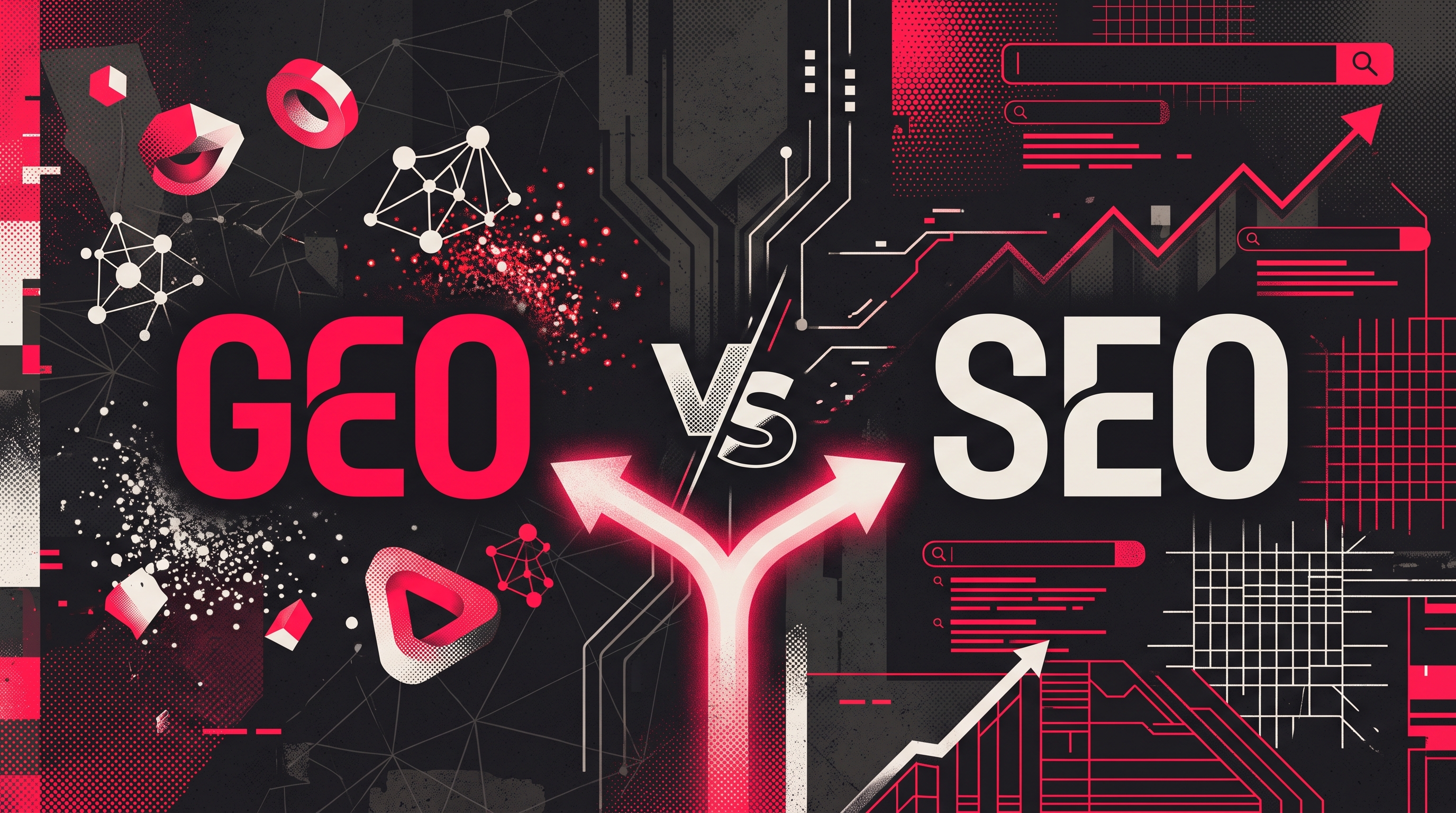
As AI changes how people discover brands, marketing departments (and the leadership teams that oversee them) face an organizational question: Should generative engine optimization (GEO) sit inside SEO, become its own specialty, or stretch across the business?
The MMA has been hosting a series of “Great Debates” about the rise of GEO, and in September, Knotch co-founder and CEO Anda Gansca participated in one called “Should GEO live inside SEO, or is it a separate discipline?” Gansca argued that if you want the answer, you have to start with a broader question: When a brand appears in an AI answer, what happens next?
“GEO is just an entry point,” Gansca said. It may help a brand enter the conversation, but visibility alone does not tell marketers whether that conversation leads anywhere valuable.
Especially for high-consideration purchases, people may research a brand with AI and then visit its website to verify what they learned, answer a more specific question, and decide what to do next. And brands need to be ready for that new customer journey. It’s a scope that goes far beyond what traditional SEO covers – so having it nested inside that discipline doesn’t make sense.
Here’s what else she had to say.
AI’s influence is bigger than referral traffic suggests
A click from an AI citation is relatively easy to identify. It is also only one way AI influences a visit.
Gansca shared Knotch research spanning 24 million page views and more than 32,000 visitor surveys. Direct referral traffic from AI citations accounted for less than 1% of traffic for the vast majority of the clients studied. Yet when visitors were asked whether they had used an AI tool to research before arriving, almost 22% said yes – roughly 50 times the share suggested by referral data. That’s what we call “Trojan Horse traffic.”
“The AI-primed audience is obviously already a meaningful part of the traffic,” Gansca said in the MMA webinar. Many of those visitors arrived through channels such as direct, social, or paid traffic. Their journey had included AI, but their final click did not reveal it. As she put it, “Some of the credit that your other channels are getting today is actually AI’s influence showing up under a different label.”
What those visitors do on the site matters, too. Gansca noted that the conversion difference on the landing page was modest: 1.7% for AI-referred visitors versus 1.2% for others. Yet among AI-referred visitors who viewed multiple pages, conversion rose to 7.7%. Those visitors are the minority, though: 73% of AI visits never made it past the first page.
“Put yourself in their shoes,” Gansca said. “They’ve already asked AI about you. They come to your site and they want to verify: Did the AI get this right? Can I answer my specific question? When they find those answers, they convert.”
The opportunity is to help visitors continue the research they have already begun. Can the site help them find a clear, credible answer? Can they easily take the next step?
And this means that optimizing for AI search means much more than just appearing in the listings.
This makes GEO reach well beyond the website
SEO remains an important foundation for making a brand’s information discoverable. But AI systems may draw on a much wider set of sources when forming an answer: a brand’s website, certainly, but also press coverage, analyst reports, reviews, social conversations, partners, and other material across the web. “Most of what shapes its answer about you is formed off-site,” Gansca said.
That is why she described GEO as “the greatest forcing function for all of us to just do great marketing.” A content team can improve a page, but it can’t singlehandedly determine how the brand is described everywhere else. Communications, brand, digital, analytics, and other teams all influence the picture that an AI system (or a potential customer) can assemble.
Gansca cautioned against letting the pursuit of a visibility score narrow that work. Rather than treating a vendor’s score as a definitive business outcome, she urged marketers to use leadership’s interest in GEO to make the case for investments that build genuine authority: distinctive, data-driven thought leadership, stronger communications, and content that people find useful. “Definitely don’t get lost in any vendor’s visibility score,” she said.
Her view on where GEO should live follows the same logic. The organizations Knotch sees succeeding, she said, have “an audience-first and a channel-second strategy.” For now, she would place GEO within an integrated marketing strategy led by someone who understands the customer journey across channels. Whether GEO eventually becomes a more distinct channel or remains a cross-channel practice is a question to revisit as the field develops.
Build for the journey ahead
Gansca also challenged the assumption that AI necessarily creates a “zero-click” future. “I believe human beings are complex. I believe human beings love choice,” she said. People make different kinds of decisions in different ways. For many considered choices, an AI answer may begin or advance the research, while the brand’s own site remains an important place to check details and make a decision.
That creates a dual responsibility for marketers: make brand information useful to the AI systems that retrieve and synthesize it, and make the website useful to the people who arrive afterward. Gansca also sees an opportunity to connect those efforts more intelligently over time. “Today the GEO practice is a manual solution to a machine problem,” she said, “and this needs to change because manual solutions will never keep up.”
At the core of everything is the fact that, well, things change. Gansca opened her remarks with a qualification: her slogan is “strong opinions loosely held.” (She talks about that on her podcast, too.) The technology and the evidence are changing quickly. But her guiding principle is clear. The goal is not simply to appear in more AI answers, but to give people accurate reasons to consider the brand, then meet them with a useful experience when they come looking.
Published on October 5, 2026
Become a thought leader
Become a thought leader







Trusted by the largest (and now smartest) brands in the world.
“Before Knotch we did not understand what content was driving business results. Now we understand which content moves the needle. Knotch’s cohesive reporting and insights paint a real picture of what’s happening on our website instead of the patchwork quilt that comes from a Google Analytics approach. With Knotch we have been able to re-prioritize ad spend, route better leads to our SDR team, and inform our content development initiatives.”

"The Knotch platform ensures that we deliver high-performing content tailored to young home shoppers, enhancing their experience and driving better business outcomes.”

"Our partnership with Knotch has been highly successful, empowering us to leverage data-driven insights and refine our content strategy.”
