
From the Digital Age to the AI Age: Takeaways from The AI-Native Web Summit
We are exiting the digital age and entering the AI age.
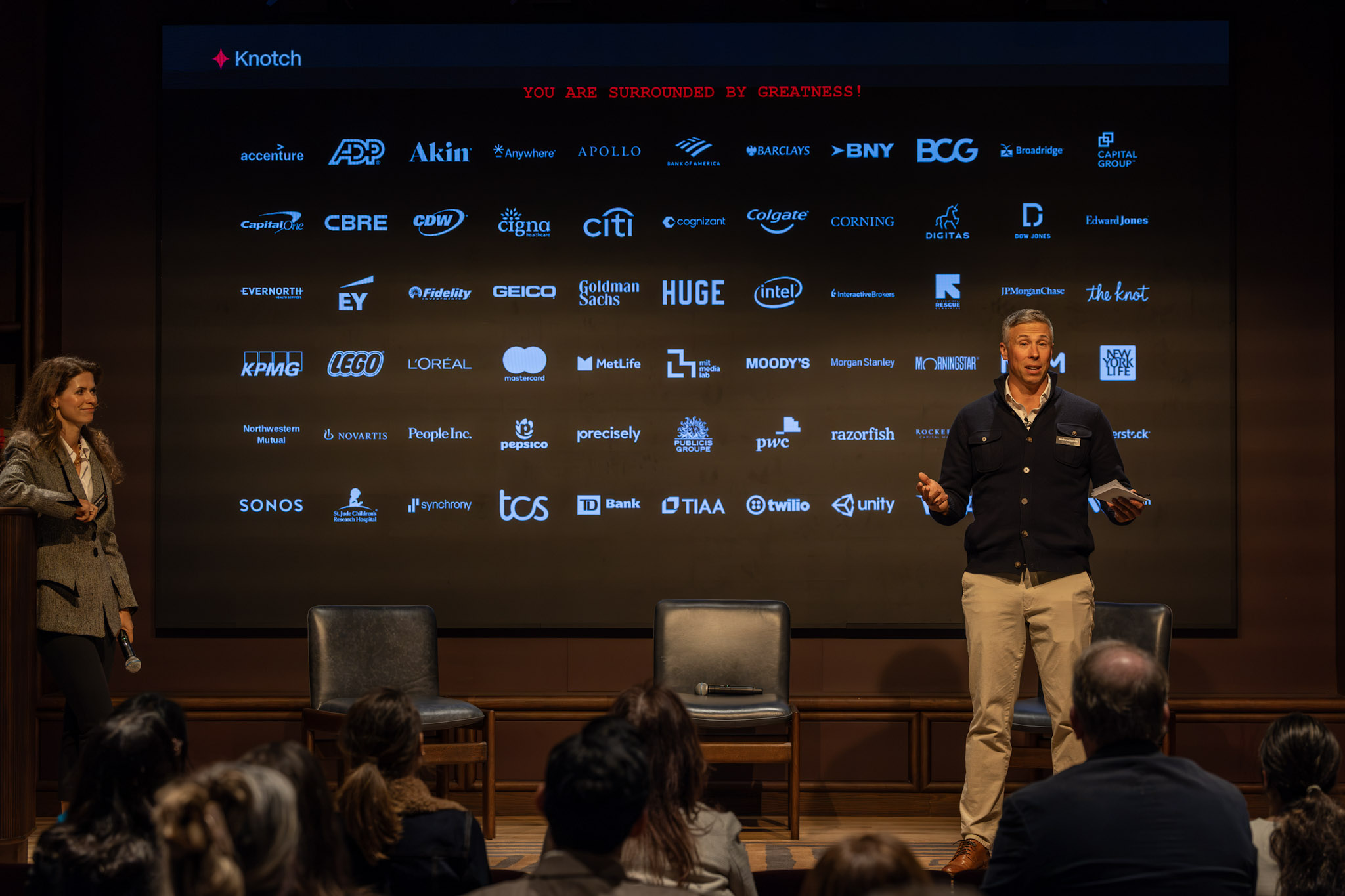
That idea ran through every session at Knotch's AI-Native Web Summit in New York on November 2, where marketing and technology leaders from across industries spent the afternoon exploring what the transition means for their websites, their technology and their teams.
The comparison to earlier transitions in marketing came up more than once: The move from analog to digital brought new tools, new processes and new roles. Organizations took years to absorb it. One panelist compared today to the arrival of Windows 95, when every office suddenly had to learn computers, and called this change far bigger.
The difference this time is speed. "You have to form adaptive systems that can keep up," Knotch Chief Customer Officer Andrew Bolton said in his opening talk, because the five-year rip-and-replace cycles of the digital age "will always put you behind." He also asked the room to accept that roughly half of today's predictions will turn out wrong. The goal is to build teams and systems that can absorb that.
The customer moved first
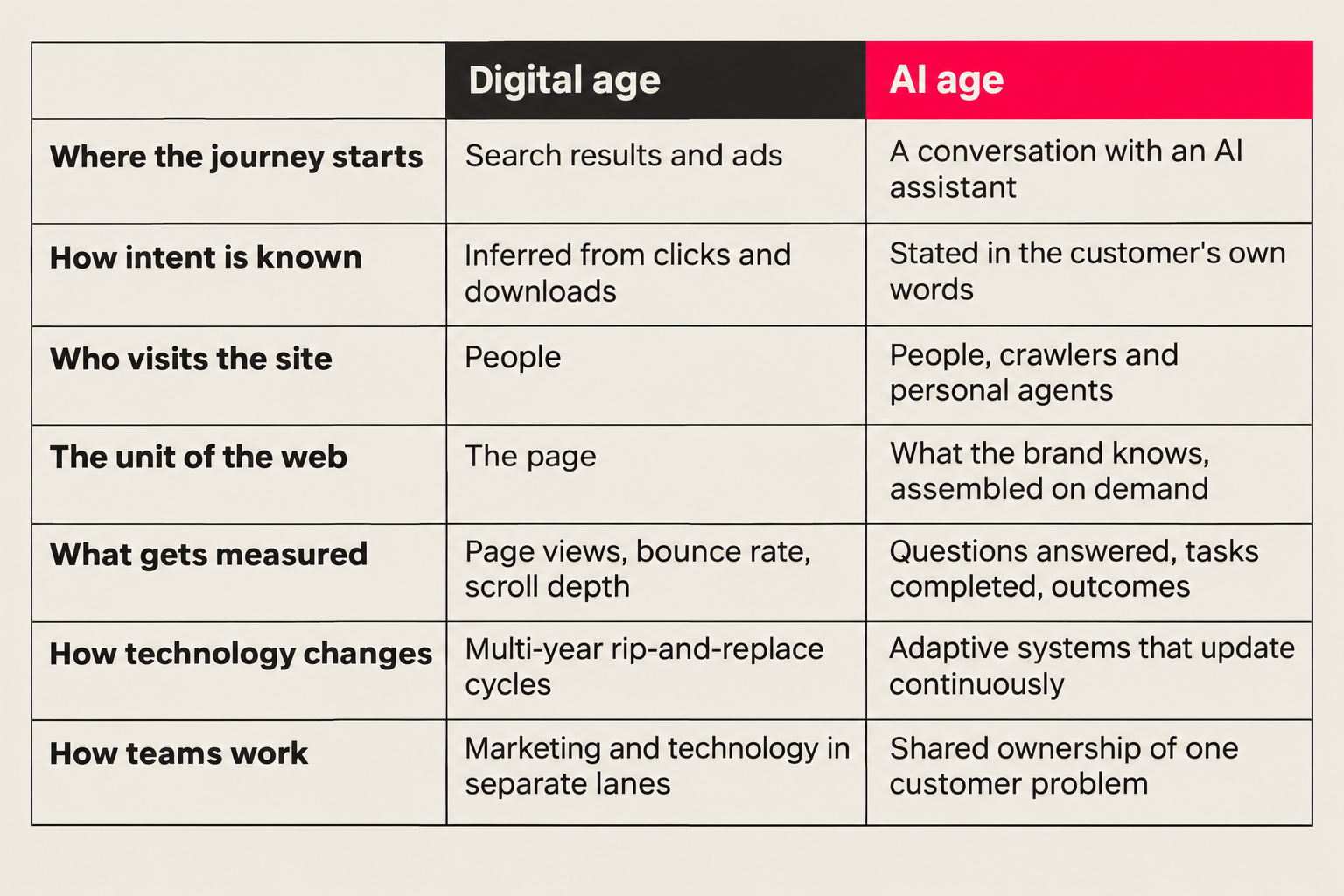
In the digital age, the audience journey ran through pages. People searched, clicked and navigated. Marketers then inferred intent from the breadcrumbs: a white paper download, a scroll, a return visit. As martech thought leader Scott Brinker noted in his keynote, a decade of martech innovation was built on guessing what those signals meant.
In the AI age, the journey starts in a conversation. Knotch research shared at the summit shows how hidden that shift is. Only about 0.4% of site traffic comes from a click on an AI citation, yet roughly 22% of visitors arrive "AI primed," having researched the brand in an LLM first. That traffic is buried inside paid, social and direct, so most analytics never see it.
These visitors behave differently. They convert at much higher rates when they find enough depth to continue, but they are impatient and quick to leave when they don't. "If you're used to this magical LLM experience where information is being brought to you, and then you go to a brand's website and you're having to hunt and search and navigate, you're going to feel that friction," Bolton said.
A third audience is arriving too. Several attendees were already using personal agents such as Muse, Dots, and Instinct; one marketing leader said her team's plans from two or three months ago had already changed because of them. Brands now serve AI-primed humans, LLM crawlers and agents acting on someone's behalf, each with different needs.
Technology: from pages to a brand context model
The digital-age stack is built around the web page, and today that’s holding brands back. Knotch co-founder and CEO Anda Gansca described marketing today as a game of whack-a-mole across SEO, AEO, personalization and testing – all bolted onto antiquated pages. "The very reason we love LLMs as consumers is because it is giving us not a page-driven scavenger hunt, but a personalized, relevant, natural language-driven conversation," she said. Her question for the day: if not the page, then what?
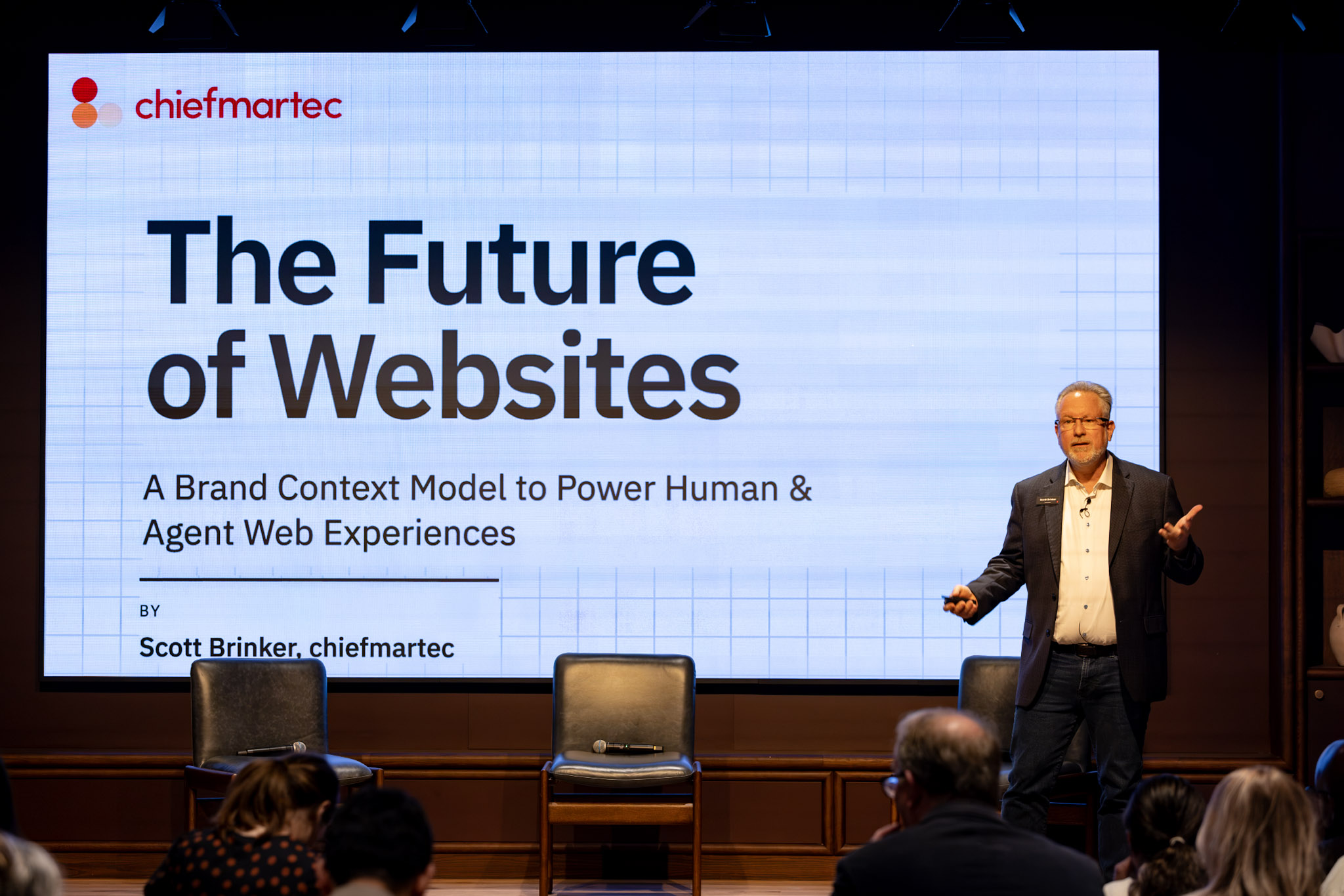
Brinker's answer, drawing on his new report “The Future of Websites,” is a shared brand context model. It pulls product facts, approved content, brand voice, and the relationships between them into one authoritative source. That source feeds two surfaces at once: intent-responsive experiences for people, and semantic services such as APIs and MCP endpoints for agents. It is not a rip-and-replace of the martech stack; it sits on top of existing systems of record, the same way teams already use AI assistants to synthesize across them.
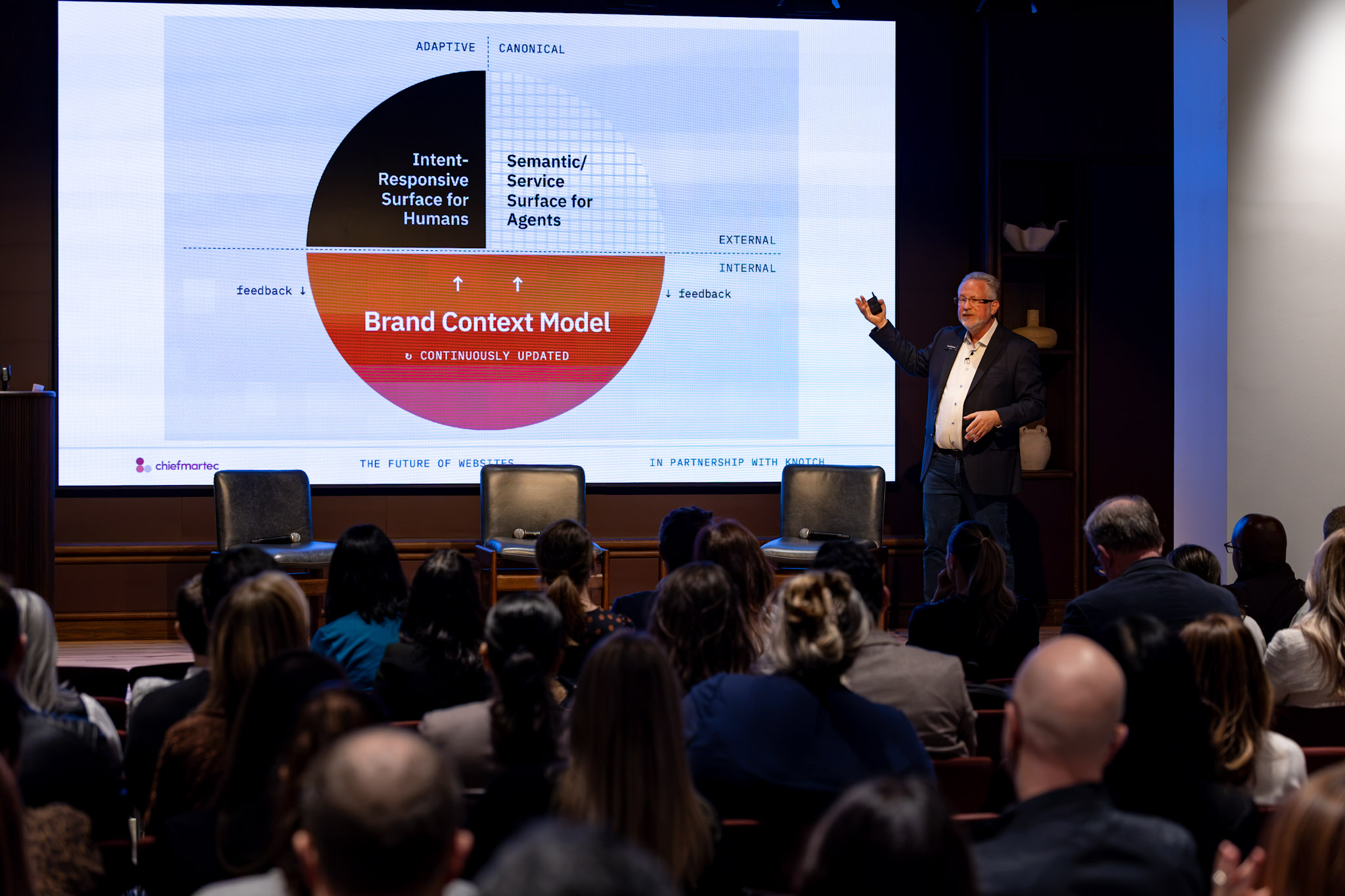
The key distinction is what gets generated. "The thing that we're talking about generating is the composition of an experience, not the underlying ground truth that feeds into that experience," Brinker said. Pages and URLs remain, but each page becomes one rendering of something deeper.
Knotch showed what that looks like in production with Ace, its AI experience infrastructure. Ace breaks a brand's content into "atoms," individual facts, claims and assets that can stand on their own, and enriches them with an ontology of topics, personas and intent. A decision layer then chooses what to show, to whom and in what format, within guardrails for voice and compliance. Examples included Think with Google, where visitors can ask a question and get a page grounded in Google's content and design language, and a single paid landing URL that rebuilds itself around whichever ad a visitor clicked.
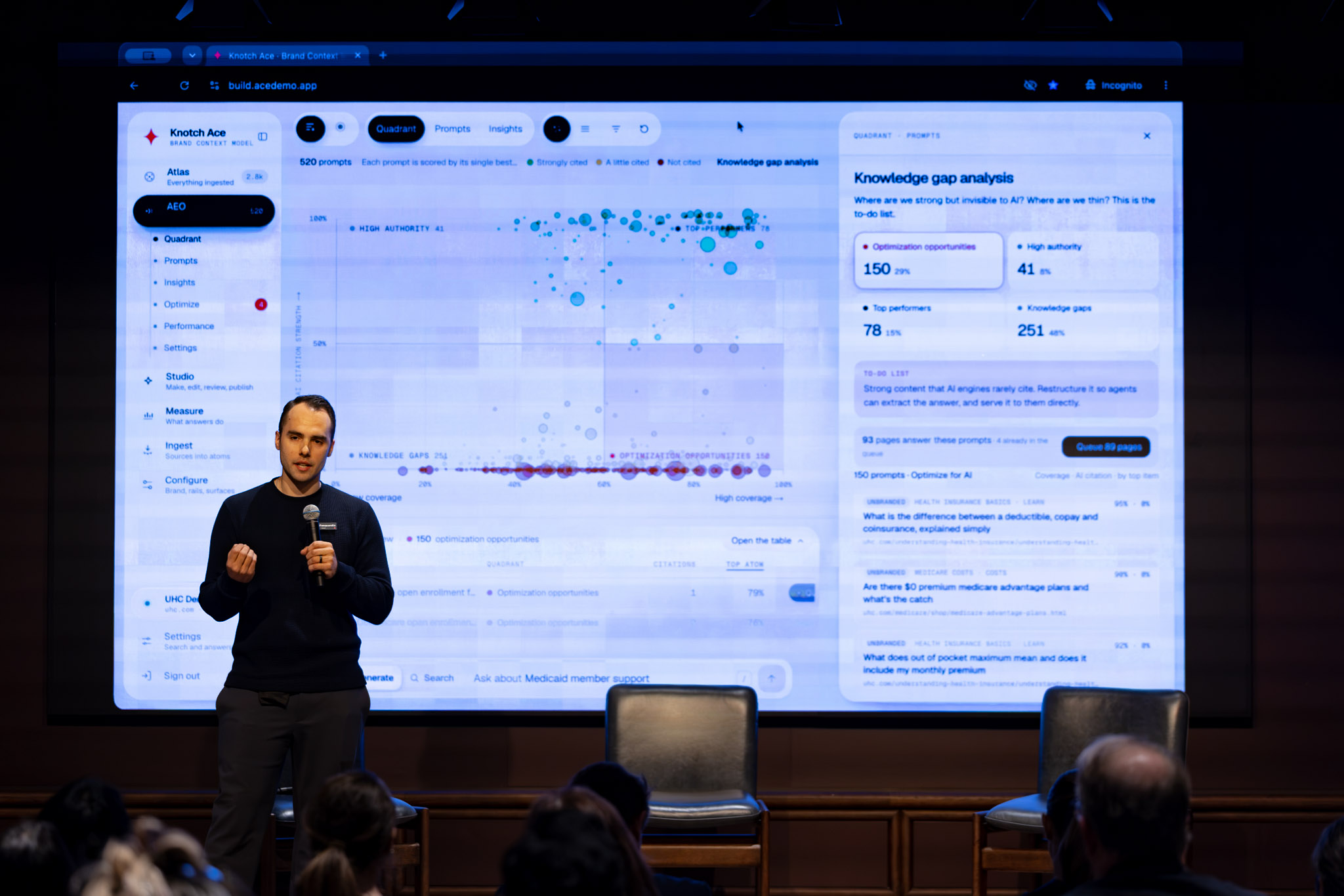
Knotch also launched Ace for Agents at the event. It maps the questions buyers ask AI engines against two measures: whether the brand has content that answers them, and how often the brand is cited. That separates optimization opportunities from true content gaps. Optimized versions are served to agents at the CDN layer, so the human site stays as designed.
One panelist summed up the technical shift in a phrase: brands need to expose themselves "as data and not content," because many of the things now reading a brand will never render a page.
Teams: from silos to one operating model
Building the technology itself, oddly enough, is the easier component of the challenge. "The technology part is hard, but it's solvable. It's a math problem," one financial services leader said at the AI-Native Web Summit. "Getting it out the door sometimes is not a math problem; it's an organizational problem." Five themes came up repeatedly.
1. Marketing and technology need to work as one unit
In the AI age there are no purely marketing or technology problems – only customer problems. Attendees at Knotch’s summit described cross-functional pods of marketers and engineers working toward one mission, and engineering resources that don't sit in marketing but are dedicated to it. One executive from a payments company pushed further: marketers now need to "laterally skill" in data and technology, not just learn new tools. Bolton's counterpoint was grace on both sides. Engineers and marketers think differently, and the value is in the middle ground.
2. Time is the real constraint on upskilling
"Tools are not the blocker, interest is not the blocker – time is the blocker," one growth marketing leader said. Her team moved AI learning time from optional to required and ran a hackathon to re-engineer processes end to end. Others replaced generic AI training with marketing-specific, hands-on sessions.
3. Governance moves from scattered agents to shared context
The first wave of AI adoption produced dozens of overlapping personal agents, and frankly, it can be a mess. One attendee at the event said that their organization had 30 separate content agents built for different executives; the company is now consolidating those into production systems and sunsetting the originals. That’s a start, but the long-term fix is a shared context layer: one approved source of brand voice, research and product facts that every agent draws on, so a company doesn't end up "sounding like 16 different companies," as one healthcare attendee put it. It’s the same brand context model idea, applied inside the organization.
4. Start with the problem, then rewire the workflow
Several leaders warned against layering AI onto existing processes. Start with the problem statement, design the ideal workflow as if there were no constraints, then work back to what regulation requires. Sometimes the answer is automation, not AI. "It's an operating model challenge now," one panelist said. In regulated industries, compliance has to be in the room from day one, with risks named, mitigations agreed and scale gated, since a pilot for 1,000 people and a launch for a million are different conversations.
AI also exposes what was never written down. When Knotch worked with Google's content team, its generated pages followed every editorial guideline and still didn't feel quite right. The lesson: humans have been making "good" without ever codifying it, and the AI age forces teams to define it.
5. Measure the job, not the activity
Token counts and agent counts aren’t success metrics. Bolton split AI into two categories. On one hand, AI for productivity should be measured the way human productivity is: output, quality and cost. On the other hand, AI for customer experience should be measured by business outcomes. He gave the example of a hotel's AI phone line that promised an ironing board in 15 minutes. It never came, and in the meantime he couldn't reach a human. The call was handled; the guest was still waiting.
Finance teams want the same discipline. Leaders described approving AI spend only with a business case, revoking unused licenses after 30 days, and right-sizing requests to avoid a "token volcano." One request for a million tokens turned out to need 10,000.
The last word on teams went to people. "We're forgetting that this is a people business," an agency leader said, and suggested every team ask what should always stay with a human, no matter what.
Building for the AI age
Anda Gansca had opened the day with a question: "How can we build a brand that can both be a destination, but also travel to all the places where it needs to go?"
By the end, the room's answer had a clear shape. The brand's knowledge has to live in one trusted place, the experiences built on it have to adapt to each person and agent, and the teams behind it have to work as one.
For marketers who need to decide where to start, the summit pointed to four moves:
- Find your AI-primed visitors. They are already in your traffic, hidden inside other channels, and they need your site to pick up where their research left off.
- Treat what your brand knows as the asset. Pages are one output. A shared, governed brand context model can feed the website, agents, apps and service channels from the same source.
- Reorganize around the customer problem. Pair marketers with engineers, give people protected time to learn, consolidate agents onto shared context, and bring compliance in on day one.
- Measure outcomes, not activity. Questions resolved, tasks completed and revenue moved matter more than page views or token counts.
None of this means you need to be able to predict the future. But it does mean you’ll need systems and teams that are built to adapt as that future arrives. For a deeper look at the brand context model, read Scott Brinker's new report, “The Future of Websites.”
Published on November 5, 2026
Become a thought leader
Become a thought leader





Trusted by the largest (and now smartest) brands in the world.
“Before Knotch we did not understand what content was driving business results. Now we understand which content moves the needle. Knotch’s cohesive reporting and insights paint a real picture of what’s happening on our website instead of the patchwork quilt that comes from a Google Analytics approach. With Knotch we have been able to re-prioritize ad spend, route better leads to our SDR team, and inform our content development initiatives.”

"The Knotch platform ensures that we deliver high-performing content tailored to young home shoppers, enhancing their experience and driving better business outcomes.”

"Our partnership with Knotch has been highly successful, empowering us to leverage data-driven insights and refine our content strategy.”
