
GEO’s real parallel isn’t SEO: It’s organic social

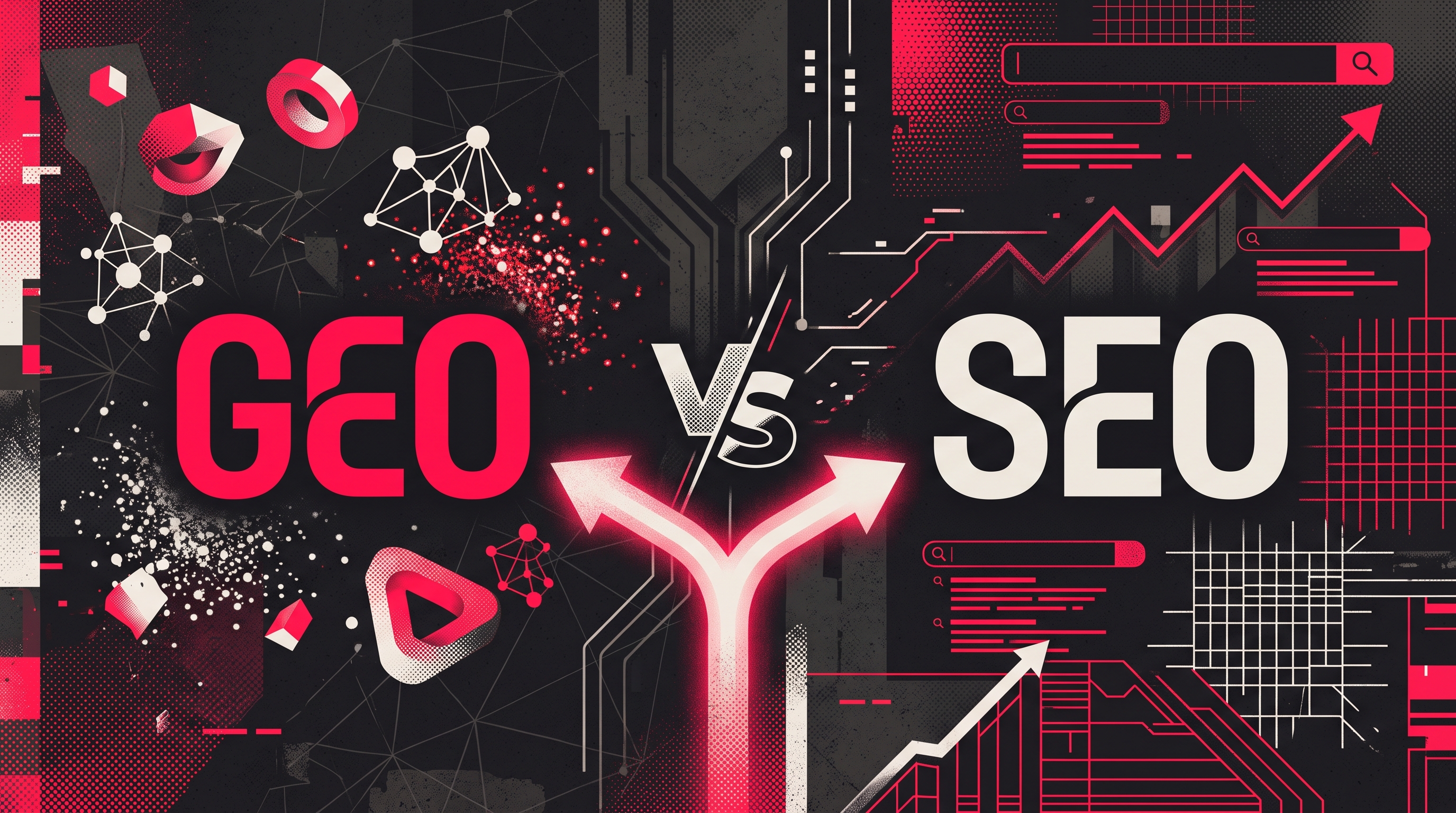
When marketers talk about generative engine optimization (GEO), the conversation often starts with a comparison to SEO. And that’s understandable – and not just because the acronyms are so similar. Both GEO and SEO have the same core objective, which is helping a brand get discovered when someone asks a question online.
But I recently had a conversation with a CMO who offered a different comparison: What if GEO has more in common with organic social – in that it’s a channel where you have to earn positive representation, and in which maintaining organizational structures that parallels SEO is in fact limiting our ability to optimize it?
I’ve come to think that’s is a more useful way to frame the challenge – and it changes how brands approach the work, who needs to participate, and what you should measure.
Your website is one part of the conversation
The typical SEO playbook gives marketers a relatively concrete starting point: Improve the content and technical foundations of a website so it can be discovered, understood, and surfaced in search. SEO has always involved authority, relevance, and reputation, too. But the goal is and always has been a click on a link in search results. And signals have shown that audiences going to LLMs for answers behave very differently.
As Knotch Labs research has found, only a tiny fraction of site visitors who wind up on a brand’s website through an AI-influenced journey are actually getting there by clicking on a citation. Instead, they’re using that LLM as part of a research journey that may take them to far-flung corners of the internet before they arrive on your site. Because LLM responses don’t “rank” links in an easy list, the pressure is no longer about being the first link but about ensuring the most accurate representation of your brand.
As a result, AI-mediated discovery asks us to think about the broader information environment around a brand. Your own content matters; but so do the reviews, coverage, discussions, and other sources that describe what you do and whether you do it well. That’s a familiar challenge for anyone who has managed organic social. Publishing on your own account is only part of the job. What customers say, what others share, and how people respond all contribute to the impression your brand makes.
You can shape that impression by contributing useful information and addressing gaps; you can make your positioning clearer and give others reasons to talk about you. But you can’t dictate the entire conversation.
GEO calls for a similar mindset. A well-structured website helps, but it can’t carry the whole burden of building a credible, coherent brand presence. Treating GEO as another website optimization project can make its scope seem much narrower than it actually is.
Visibility has to be earned across touchpoints
Organic social teams understand that having a publishing schedule doesn’t guarantee attention. Distribution depends on whether content resonates, whether people engage with it, and whether it becomes part of a larger conversation. GEO, similarly, calls for a need to earn visibility through the quality and consistency of your marketing across touchpoints.
Consider it this way: If your website describes one value proposition, your executives emphasize another when they talk to the press, and customer discussions tell an entirely different story, you have a brand problem that a technical fix alone won’t resolve. LLMs won’t get a straightforward story and it’ll hurt your brand’s ability to surface in their interfaces.
You should start tackling this with questions that should already be central to good marketing: What do we want to be known for? What evidence supports that positioning? Are we explaining it clearly? Do the experiences people have with us reinforce it?
This also makes GEO a team sport. Content, communications, social, brand, customer marketing, and technical teams all influence the information available about a company. They need a shared understanding of the story they are helping to build.
Measure the conversation, not just a position
The organic social comparison is especially useful when deciding what success looks like.
A search ranking gives marketers a familiar reference point: Where do we appear for a particular query? It’s tempting to apply the same logic to AI answers by assembling a list of prompts and checking whether the brand appears.
Those checks can be useful, but they’re a sample rather than a complete picture of what customers are asking. And a mention alone tells you little about whether your brand is being represented accurately or persuasively.
Organic social offers a broader set of questions:
- Share of voice: How often does our brand appear relative to competitors in relevant conversations?
- Sentiment: Is the surrounding discussion positive, negative, or mixed?
- Message accuracy: Are we associated with the capabilities and strengths we want to be known for?
- Direction over time: Is that picture improving, and where are persistent gaps emerging?
For GEO, these are ways to assess a pattern rather than react to a single answer. The objective is to understand whether your brand is becoming more visible, more accurately understood, and more relevant to the decisions customers are making.
Visibility still needs to connect to business outcomes. At Knotch, we also want to understand what happens when that influence brings someone to a brand’s website: Does the experience meet their needs? Does the content help them evaluate their options? Can they move forward?
Don’t let optimization crowd out the audience
There’s another reason to be careful about importing the SEO playbook wholesale: Marketers have seen what happens when optimization becomes the purpose of content. Often, it isn’t pretty.
A page can contain all the phrases a brand wants to rank for and still leave a visitor struggling to find anything useful. That’s because it was never written for actual human consumption. We’ve all had the experience of winding up on an SEO-formulated page with awkward and repetitive language, and it’s far from an ideal experience. As companies adapt their content for AI discovery, we should be asking whether those changes also make the experience clearer and more helpful for actual humans.
The organic social comparison keeps audience value in view. Successful participation requires something worth contributing: useful expertise, clear answers, credible evidence, and a recognizable point of view.
That’s the real opportunity with GEO. Build a brand presence that deserves to be surfaced, make it easy to understand across the places people encounter it, and create an experience that delivers when they arrive.
Published on October 28, 2026
Become a thought leader
Become a thought leader





Trusted by the largest (and now smartest) brands in the world.
“Before Knotch we did not understand what content was driving business results. Now we understand which content moves the needle. Knotch’s cohesive reporting and insights paint a real picture of what’s happening on our website instead of the patchwork quilt that comes from a Google Analytics approach. With Knotch we have been able to re-prioritize ad spend, route better leads to our SDR team, and inform our content development initiatives.”

"The Knotch platform ensures that we deliver high-performing content tailored to young home shoppers, enhancing their experience and driving better business outcomes.”

"Our partnership with Knotch has been highly successful, empowering us to leverage data-driven insights and refine our content strategy.”
