
The Hidden Influence of AI: Inside the Rise of Indirect LLM Traffic
Knotch Labs' latest data reveals how AI tools are silently reshaping brand discovery long before analytics can detect it.
What Marketers Are Missing about AI Traffic
Discussions about AI's impact on web traffic often focus on direct referrals — the small but growing number of visits from large language model (LLM) platforms like ChatGPT, Google's AI Overviews, Gemini, and Perplexity.
You might be surprised to learn that this is actually a fairly small cohort of visitors. Across Knotch clients, looking at 567 million page views from January 2025–March 2026, direct AI referral traffic accounts for roughly 0.1% of all views. It is growing, from 0.085% in Q1 2025 to 0.120% in Q1 2026, but the movement is measured in hundredths of a percentage point. Over the same period, organic search share fell by more than 40%, from about 14% to under 8%.
But data from Knotch Labs suggests this view is missing something much bigger: indirect LLM traffic. This is the traffic that results from consumers using LLMs as part of their discovery journey, even if they didn’t click on a link provided to them by ChatGPT or Claude to get to a brand’s website.
In surveys conducted across several Knotch client sites between July 2025 and May 2026, representing more than 32,000 responses, visitors were asked whether they had used an AI tool — Google’s AI Overview, ChatGPT, Bing Copilot, Gemini — before arriving at the page they were on.
22% of respondents said yes. These results reframe the conversation entirely.
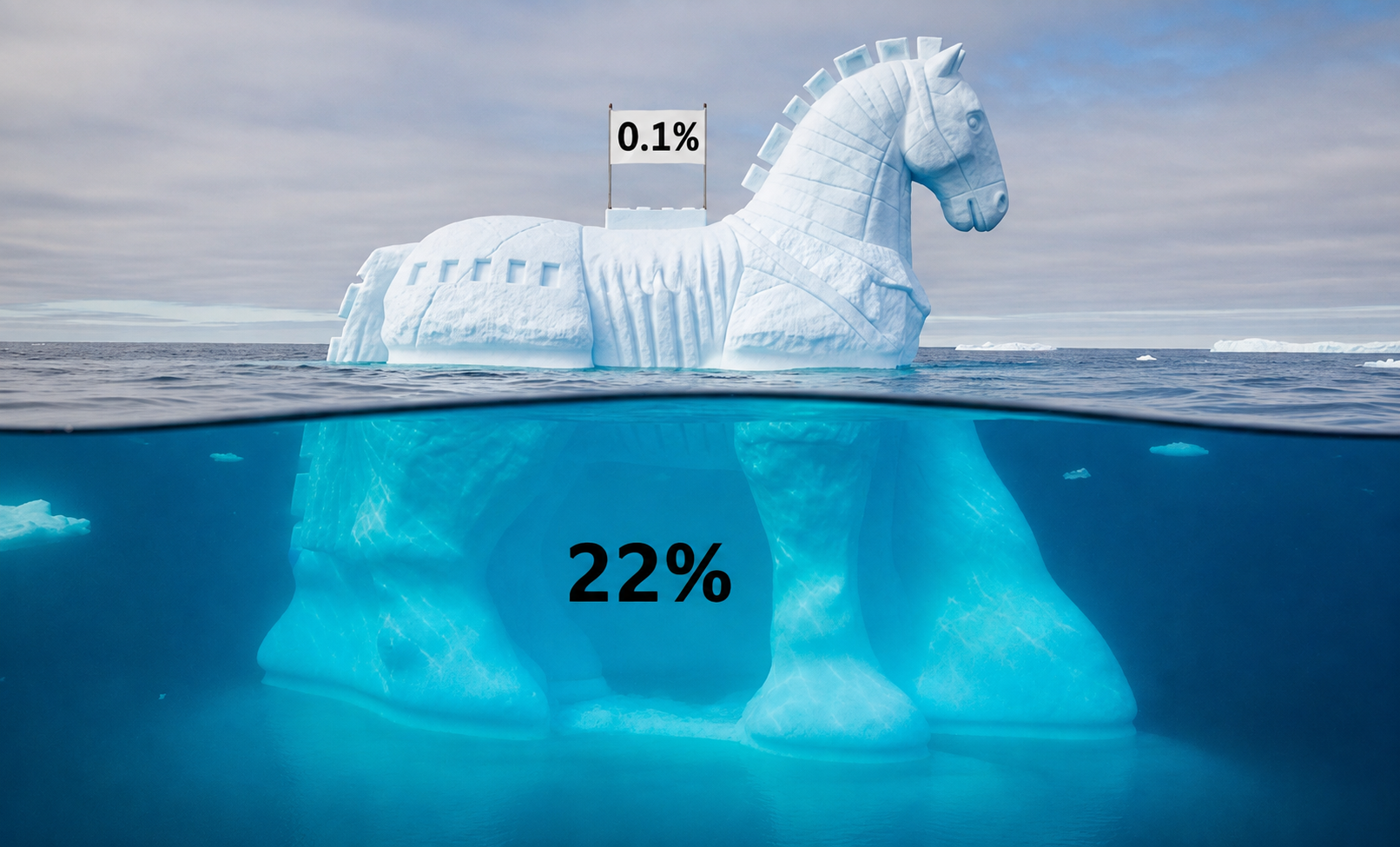
AI’s Trojan Horse Traffic
Within those same survey programs, tagged AI referral accounted for 0.4% of page views. Put that beside the 22% who said they arrived AI-primed, and the gap is the story: the AI-primed audience is roughly 54 times larger than the audience analytics tags as AI Search.
In other words, traditional analytics are tracking the visible tip of an iceberg. The real behavioral change is happening below the surface, even if some of that signal reflects overreporting or confusion about what counts as “AI use.”
We're calling this phenomenon Trojan Horse traffic. It's a hidden stage in the customer journey in which generative AI environments shape consumer curiosity, confidence, and intent — often in combination with other marketing touchpoints — before a click ever reaches your website.
Curiosity Is the New Conversion Trigger
Among visitors who said they had used AI tools before arriving and answered a follow-up question, 57% reported that those interactions influenced their decision to visit the site.
That's a critical insight for marketers fighting through the “missing middle” — the long, uncertain period between awareness and decision-making. It suggests that AI is shaping intent, not simply routing traffic.
LLMs are, in effect, warming up these audiences before a retargeting ad or organic search click ever appears in analytics.
Why This Matters
Marketers have long known that attribution lags behind behavior. The same was true in the early days of mobile, then social, then influencer marketing. AI discovery is now repeating that cycle — and it's a leading indicator of how consumer intent will form in the next wave of digital discovery.
These early signals suggest that LLMs are becoming decision accelerators, rather than simply new referral channels. Understanding their indirect impact may soon be as essential as SEO itself was a decade ago.
Metrics to Watch
As Trojan Horse traffic becomes more measurable, marketers should prepare to track:
- AI Exposure Rate: The percentage of visitors self-reporting AI use before arrival. Measure your own, by page type.
- AI Motivation Lift: The percentage of AI-guided users who say AI interactions increased their curiosity or purchase intent.
- AI Path Efficiency: Session duration, steps-to-conversion, and CTA engagement among AI-exposed visitors vs. others.
- Channel Rebalancing: The share of direct, social, and search traffic that originates as Trojan Horse traffic.
- Search Displacement Rate: The percentage of AI-guided users who used AI instead of a search engine.
These metrics will define how LLM discovery gets integrated into marketing analytics over the next 12–18 months.
The Bottom Line
The story of AI discovery today isn’t yet a story about volume. But it’s very much about influence.
Direct LLM traffic may still be small, but the indirect effects are measurable and material. AI is quietly shaping how consumers decide what to learn, what to trust, and ultimately what to buy.
Marketers are used to acting reactively when algorithms shift. This time is different: start tracking this hidden layer now, and you'll be ahead of the changes to come.
Tagged AI referral share is the AI Search share of page views across 10 industries, ~567 million page views, January 2025–March 2026. Survey figures: 32,000+ responses across five brand sites, July 2025–May 2026, where tagged AI referral ran 0.4% of page views.
Published August 10, 2026
Become a thought leader
Become a thought leader








Trusted by the largest (and now smartest) brands in the world.
“Before Knotch we did not understand what content was driving business results. Now we understand which content moves the needle. Knotch’s cohesive reporting and insights paint a real picture of what’s happening on our website instead of the patchwork quilt that comes from a Google Analytics approach. With Knotch we have been able to re-prioritize ad spend, route better leads to our SDR team, and inform our content development initiatives.”

"The Knotch platform ensures that we deliver high-performing content tailored to young home shoppers, enhancing their experience and driving better business outcomes.”

"Our partnership with Knotch has been highly successful, empowering us to leverage data-driven insights and refine our content strategy.”
